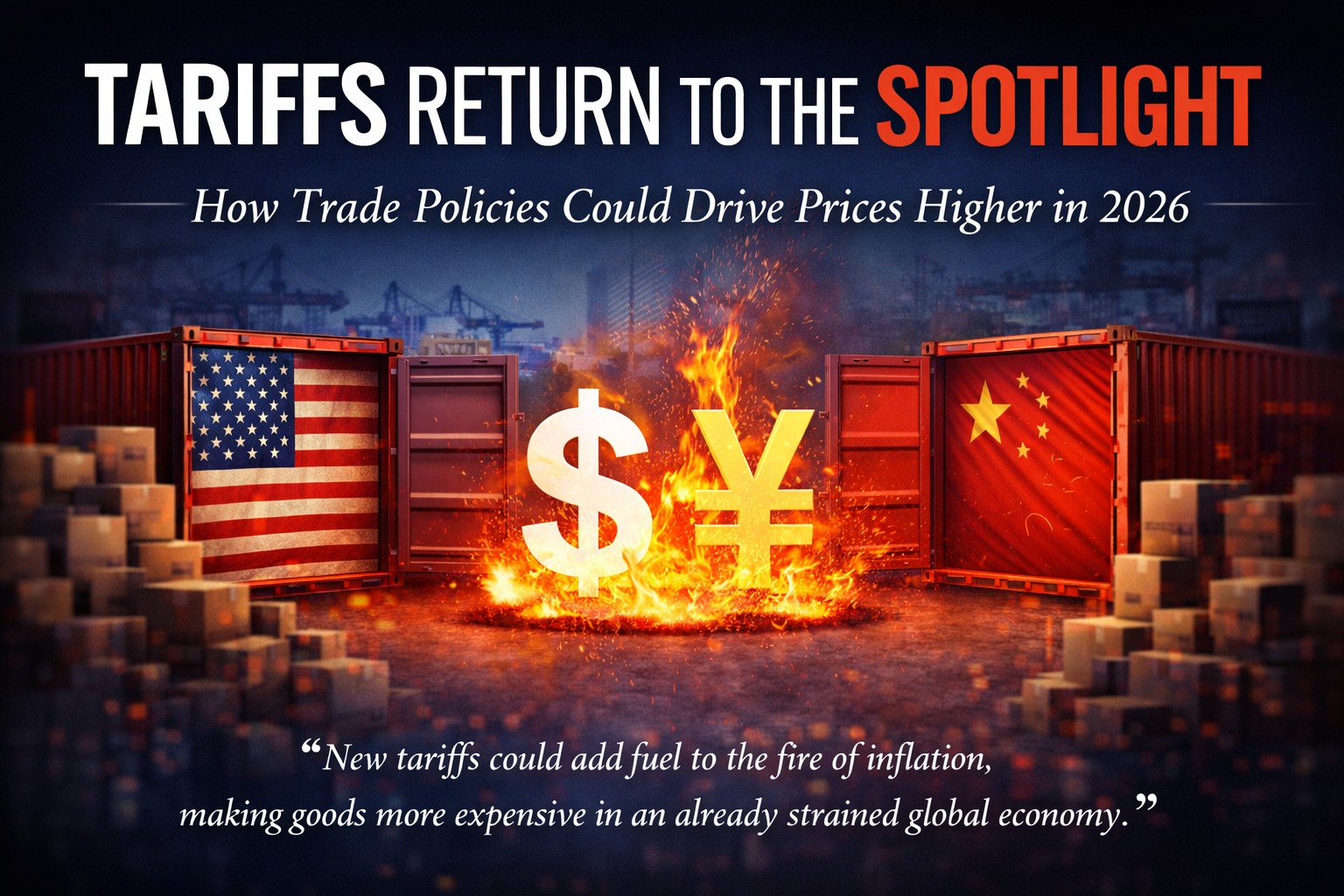
Trade Policy Back in Focus
Trade policy is once again moving to the center of the U.S. economic conversation in 2026. After a period in which domestic inflation and monetary policy dominated headlines, renewed discussions around tariffs, industrial policy, and economic security are bringing global trade dynamics back into focus. Policymakers are increasingly weighing the benefits of protecting domestic industries against the broader economic costs, particularly in a fragile global environment.
This renewed attention reflects a shifting geopolitical landscape, where trade is no longer viewed purely through the lens of efficiency, but also as a tool for national strategy. However, the economic implications of these decisions remain significant and far-reaching.
The Inflationary Effect of Tariffs
Tariffs, by design, function as taxes on imported goods. When imposed, they raise the cost of bringing foreign products into the domestic market. In many cases, importers pass these higher costs on to consumers, leading to increased prices across a range of goods.
This is why tariffs are generally considered inflationary. Their impact is especially pronounced when applied broadly across key sectors such as manufacturing, technology components, or consumer goods. Even when targeted, tariffs can create ripple effects, as higher input costs for businesses translate into higher final prices.
In a year like 2026—when inflation remains a sensitive issue—this dynamic presents a clear policy trade-off. Measures intended to support domestic production may inadvertently add to price pressures, complicating efforts to stabilize the economy.
Supply Chain Disruptions
Beyond their direct impact on prices, tariffs can significantly disrupt global supply chains. Modern production systems are highly interconnected, often relying on components sourced from multiple countries. When tariffs are introduced, these established networks can be forced to adjust quickly.
Companies may respond by seeking alternative suppliers, relocating production facilities, or redesigning their supply chains altogether. While these adjustments can improve resilience over the long term, they often come with short-term costs. Switching suppliers can be expensive, time-consuming, and less efficient, particularly if alternatives are limited.
These disruptions can also lead to delays, reduced productivity, and increased operational complexity. In industries where timing and cost control are critical, such as electronics or automotive manufacturing, even small inefficiencies can have significant financial consequences.
Impact on Businesses
For businesses, trade policy uncertainty creates a challenging planning environment. Tariffs not only increase costs but also introduce unpredictability, making it more difficult to forecast demand, manage inventories, and plan investments.
Companies that rely heavily on imported materials or intermediate goods are particularly exposed. Higher input costs can squeeze profit margins, forcing firms to either absorb the impact or pass it on to customers. Neither option is ideal: absorbing costs reduces profitability, while raising prices risks weakening demand.
Smaller businesses often face greater challenges in adapting to these changes. Unlike large multinational corporations, they may lack the resources or flexibility to quickly adjust supply chains or negotiate better terms with suppliers.
At the same time, some domestic industries may benefit from reduced foreign competition. However, these gains are often uneven and may come at the expense of efficiency and overall economic welfare.
Global Retaliation Risks
One of the most significant risks associated with protectionist trade policies is the potential for retaliation. When one country imposes tariffs, affected trading partners often respond with their own measures. This can escalate into broader trade conflicts, sometimes referred to as trade wars.
Retaliatory tariffs can directly impact exporters, reducing access to foreign markets and lowering demand for domestically produced goods. This is particularly relevant for sectors such as agriculture, manufacturing, and technology, where international trade plays a major role.
In addition to direct economic effects, trade conflicts can weaken global cooperation and increase uncertainty in financial markets. Businesses may delay investment decisions, and supply chains may become more fragmented as countries prioritize self-sufficiency over efficiency.
Conclusion
As trade policy returns to the forefront in 2026, its implications for inflation, business activity, and global economic stability are becoming increasingly clear. While tariffs and protectionist measures can serve strategic and political objectives, they also carry significant economic costs.
Policymakers face a delicate balancing act: supporting domestic industries and national interests while minimizing unintended consequences such as higher inflation, disrupted supply chains, and retaliatory actions. The choices made in this area will have lasting effects not only on the U.S. economy but also on the broader global trading system.
In an interconnected world, trade policy is never just a domestic issue. Its impact extends across borders, influencing growth, prices, and economic relationships worldwide. As a result, careful and measured decision-making will be essential to navigating this complex landscape.